Beyond Division
We live in a time of both crisis and opportunity. There are many reasons to be anxious, and none of them are imaginary. The fractures are real. The rhetoric is sharp. The pull toward either-or thinking, toward us-against-them, feels relentless. Yet hope remains—not only hope in God, but hope in the quiet awakening of hearts who are rediscovering the value of nonduality: a way of thinking, acting, reconciling, boundary-crossing, and bridge-building that arises from inner experience of God and God’s Spirit moving in the world.

This is not a rejection of the rational mind. It is not a refusal to act against injustice. It is a growth into mystical, contemplative, unitive consciousness. When both mind and mystic heart are alive within us, we see more broadly, more deeply, more wisely, more lovingly. We become capable of collaboration instead of conquest. We dare to imagine creative solutions to today’s problems. This is a strong claim about who we are: we are capable of such wholeness. The human heart is not doomed to fragmentation. It is fashioned for communion.
There was a stream of spiritual writers, preachers, and teachers who knew this. In the Rhineland of Northern Europe, between the eleventh and fifteenth centuries, voices rose with unusual courage and creativity. Because of distance from centralized control, the trans-alpine Church drew upon different sources and inspirations. It breathed a certain freedom. Out of that freedom emerged Hildegard of Bingen and Gertrude the Great, Mechthild of Magdeburg, Meister Eckhart, Johannes Tauler, Henry Suso, Nicholas of Cusa—souls who honored the essential mystery and unknowability of God. Their legacy would later influence even a modern psychiatrist like Carl Gustav Jung.
Their path was not always welcomed. After the Reformation, the mystical way was often mistrusted. Emphasis on Scripture alone served as a necessary corrective to over-spiritualization, yet personal spiritual experience came to be seen as suspect. Rational theology flourished. Study became refined, disciplined, immense in its gift to the world. And still, one can become trapped inside endless discussions of abstract ideas with little emphasis on experience or practice.
Here is the deep invitation: honor both the gift of study and the experience of mystery. Refuse the false choice. Nondual thinking does not discard reason; it widens it. It allows us to stand against injustice while remaining rooted in union. It draws us beyond the illusion that we must choose between clarity and compassion. “The eye with which I see God is the same eye with which God sees me,” wrote one of these mystics, echoing the unity whispered in many traditions (cf. Meister Eckhart; John 17:21).
Our struggle is often subtle. We cling to certainty. We fear losing control. We mistake analysis for transformation. Yet the Spirit moves in the world still. To grow in contemplative consciousness is to trust that the mystery of God exceeds our categories and invites us into participation. When we consent to that mystery, our lives become sites of reconciliation. We cross boundaries. We build bridges. We collaborate in healing what is broken.
Let this be said plainly: humanity is capable of unitive vision. We are not condemned to binaries. We are invited into a larger seeing, a wiser loving. And the world aches for people who will live from that depth.
Let us turn inward now, consenting to the mystery that moves beyond all divisions. Rest in the silence for a few minutes.
Be Still and Know:
Breathing in, I receive the Spirit moving in the world.
Breathing out, I release every either-or.
Breathing in, I consent to mystery.
Breathing out, I become a bridge of peace.
Heart of the Message:
Hope for our fractured time lies in rediscovering nondual, mystical consciousness that unites reason and contemplative experience, empowering us to move beyond division into creative, loving collaboration.
What boundary in your own life is waiting to be crossed by a deeper, more unitive way of seeing?
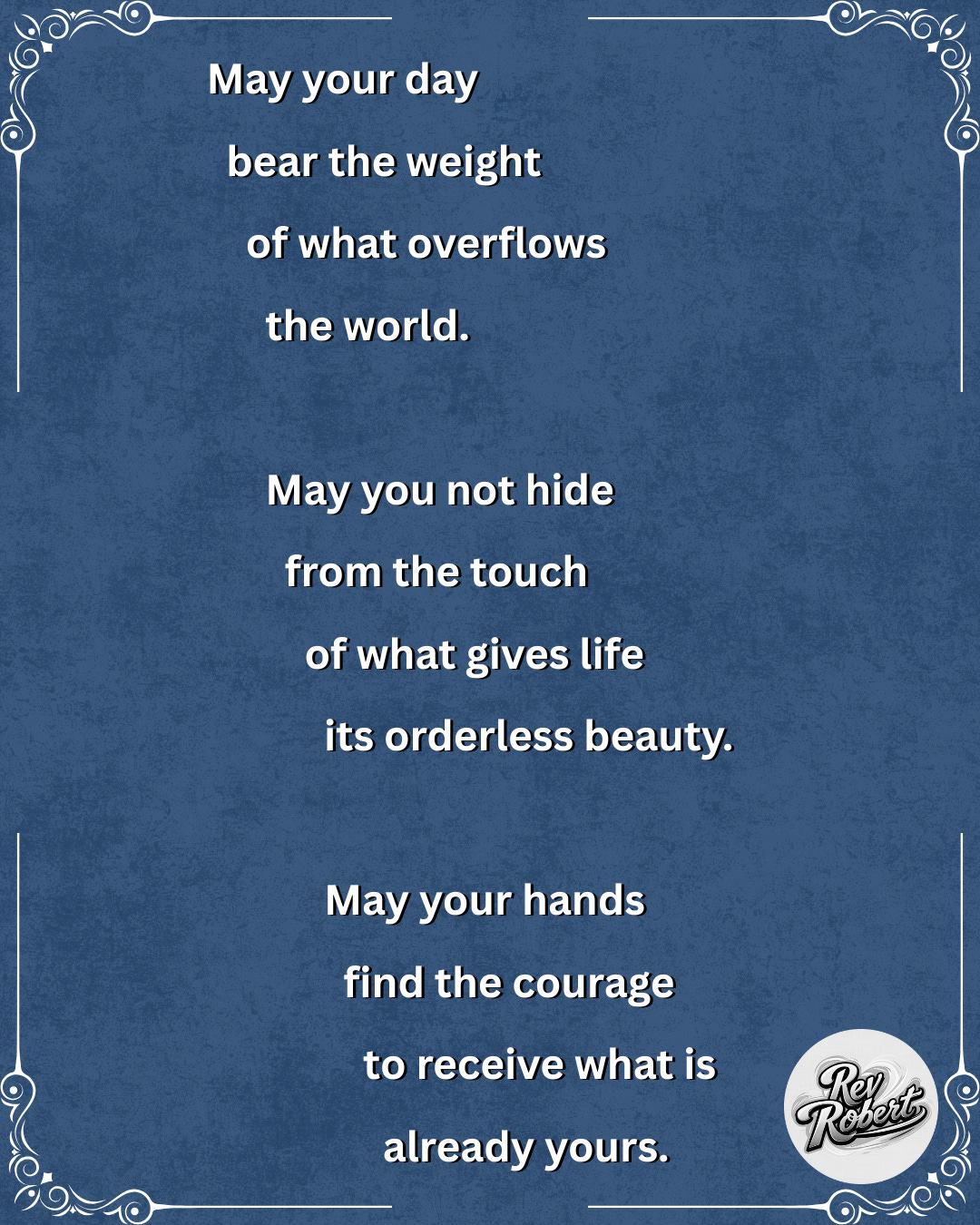
Across centuries,
voices dared to trust the mystery.
Not mind against spirit,
not justice against love—
but a single seeing
wide enough for both.
The Spirit still moves
beyond our divisions,
waiting for us
to see with one eye.
The Unseen Sand
The contemplative path requires dying to the false self that judges others while remaining blind to one’s own brokenness.