Learning Compassion by Doing
It is a hopeful truth about our humanity that generosity can appear in unexpected places. Sometimes the heart reveals itself not through the positions we defend but through the care we extend. A person may speak with certainty about policies and fears, yet still pause to accompany someone who is vulnerable, offering time, money, and presence. In such moments we glimpse something essential about the human spirit: we are capable of compassion even when our understanding is unfinished.
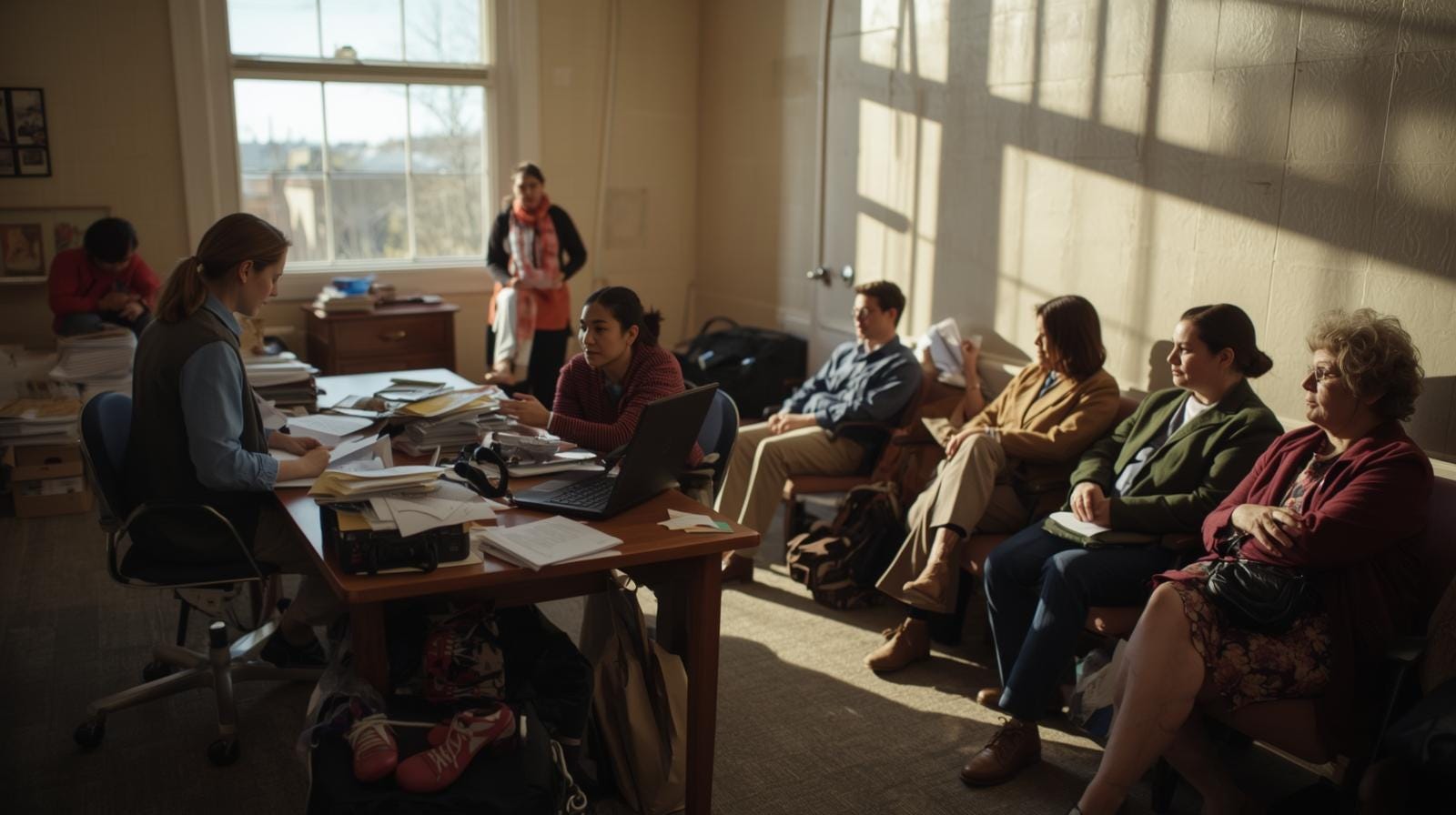
One woman came to an immigration clinic with firm opinions about the work being done there. She questioned why anyone would become so involved in advocacy and policy. Her words carried hesitation about foreigners and the changes they represent. Yet her actions told a more complicated and more generous story. She had brought a friend who needed help renewing a work permit. Because the woman feared losing a day’s wages, she was paid not to clean that day. She was driven to the clinic, accompanied through the waiting and paperwork, and supported again later when the petition was filed.
If you really want to make a friend, go to someone’s house and eat with him…. The people who give you their food give you their heart. —César Chávez
Such gestures reveal a quiet truth about spiritual life. The love of strangers is not merely a sentiment or a slogan. It is a way of living that unfolds through concrete acts of care. We sometimes imagine that belief must come first, that clarity must precede compassion. Yet the deeper mystery is that our practices can lead us into new understanding. When we accompany another person, when we make room at the table or stand beside someone navigating uncertainty, our own hearts begin to change.
Many of us know the tension between what we say we believe and what we actually do. There are moments when fear speaks loudly, and other moments when kindness quietly interrupts it. The good deed carries its own wisdom (Matthew 21:28–30). By practicing welcome, we slowly grow into the very hospitality we may once have questioned.
Perhaps this is one of the great possibilities within us: we can learn mercy by living it. Each small act becomes a teacher. Each step of accompaniment reshapes the landscape of the heart.
And so the invitation is simple and courageous. Show up. Offer presence. Walk with someone whose path is uncertain. In doing so, we may discover that compassion has been forming us all along.
Let us settle gently into stillness and allow these movements of the heart to deepen. Rest in the silence for a few minutes.
Be Still and Know
Breathing in... I welcome the stranger within and around me.
Breathing out... I offer the quiet gift of presence.
Heart of the Message:
Compassionate action can shape the heart and lead us into deeper understanding and genuine hospitality.
Where in your life might a simple act of accompaniment open the door to a more spacious heart?
A door opens quietly
in the ordinary afternoon.
Two people sit together
with papers, questions,
and the hum of a waiting room.
Coins placed in a meter,
a car parked in an expensive garage,
time given where time could have been kept.
And somewhere unseen
a small seed breaks open—
not in speeches,
not in arguments,
but in the patient courage
of staying beside another life
until the road ahead
feels a little less lonely.
Realigning with Goodness

There are moments when we feel as though our missteps define us. Yet the deeper wisdom of the spiritual life suggests something far more hopeful. To stray from what is good is not proof of a broken nature; it is simply a moment of misalignment. Just as an archer may release an arrow that lands short of the target, our actions sometimes fall away from th…
Remembering We Are Born from Love

The world often explains its wounds by declaring humanity broken at the root, as though darkness were the deepest truth about us. Yet another wisdom whispers beneath the noise of accusation and fear. What if the violence that surrounds us is not evidence of a corrupt origin, but the cry of a humanity estranged from its own belovedness? When people lose …